Emergency Roof Repairs in Taunton: What to Do First and What It Costs
A roof leak always seems to arrive at the worst moment - 11pm, mid-storm, with water tracking down a bedroom wall. In Taunton, that moment comes more often than most homeowners expect, because the town sits under some of the heaviest rainfall in lowland England, roughly 900-1,000mm a year, funnelled off the Blackdown Hills and Quantocks. The first hour of a leak matters more than almost anything else you'll do: acting fast can be the difference between a £150 patch and a £3,000 ceiling replacement. Emergency roofing callouts spike 3-4 times above normal in the days after a named storm, and Somerset gets its share every winter. The good news is that most emergencies are stabilised in a single visit, and an emergency callout in the Taunton area typically runs £150-£400 before any permanent repair. Here's exactly what to do first, and what the numbers look like once a roofer is on the way.
What Counts as a Roofing Emergency
Not every roof problem is a 999 job, and knowing the difference saves you money. A genuine emergency is active water getting into the living space, a structural risk, or damage that will get dramatically worse before morning. A single slipped tile on a dry week is not an emergency - it's a repair you book for next Tuesday.
Treat it as urgent if you have water dripping through a ceiling, a bulging or sagging plaster patch (that's water pooling above it, and it can come down all at once with 20-30 litres behind it), tiles or a whole section stripped by wind, or a tree limb through the roof. Around 40% of winter emergency calls in the South West follow high winds rather than rain alone, because Taunton's exposure to Atlantic gusts - design gusts of 45-55mph most winters, higher in named storms - lifts tiles from the edges and ridge first.
If you're unsure whether what you're seeing needs same-day attention, Roof Repairs Taunton can talk it through over the phone and tell you honestly whether it waits or not - a good local firm won't send someone out at emergency rates for a job that can wait a fortnight.
The First Hour: What to Do Before the Roofer Arrives
The jobs in the first hour are all about limiting damage inside, not fixing the roof. Nobody should be climbing onto a wet Taunton roof in a storm - that's how a £400 problem becomes a hospital visit.
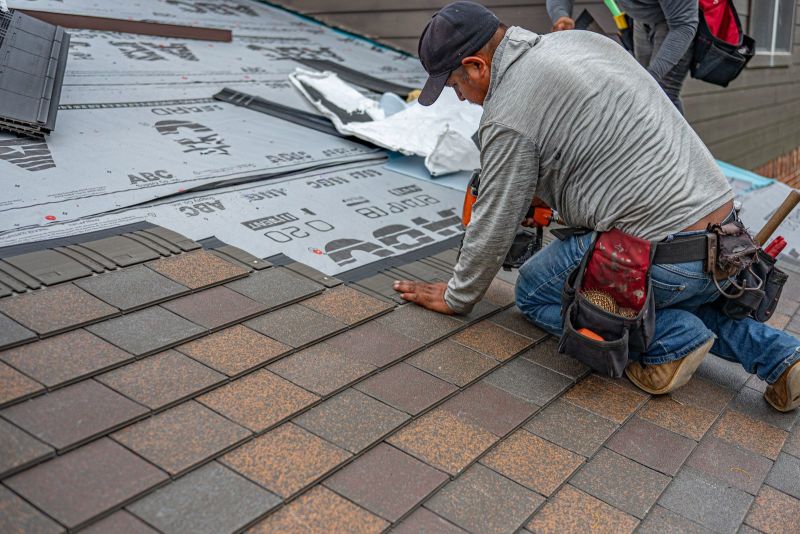
Start inside. Move furniture, electronics, and anything that matters out from under the leak, and lift carpets or lay towels. Get a bucket under the drip, and if water is pooling behind a bulging ceiling, put a bucket underneath and pierce the centre of the bulge with a screwdriver to let it drain in a controlled stream - counterintuitive, but far better than the whole ceiling letting go at once. Turn off electrics to the affected area at the consumer unit if water is anywhere near light fittings or wiring; water tracks along joists and can reach a rose two rooms away.
Then document everything. Photograph the damage inside and out (from the ground), note the date and the weather, and keep any tiles that have blown down. Insurers settle storm claims faster with a clear record, and roughly 1 in 5 emergency jobs ends up as an insurance claim.
How a Roofer Stabilises the Leak
The first visit is about making the roof watertight, not perfect. This is a two-stage trade: stabilise now, repair properly once it's dry and safe.
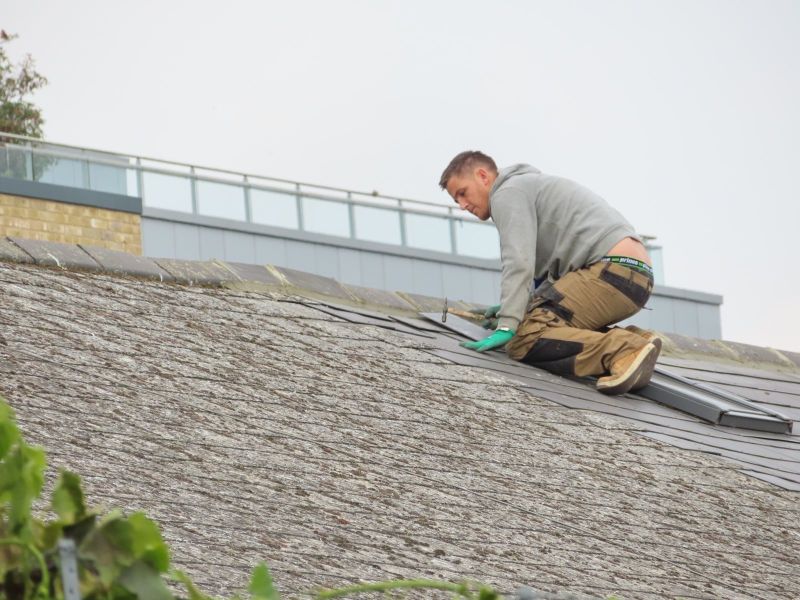
The standard emergency fix is a tarpaulin or heavy-duty polythene sheet, battened down over the damaged area and weighted or nailed at the edges so wind can't get under it. On a Taunton roof exposed to Quantock gusts, edge fixing is everything - a badly tied tarp becomes a sail by 2am. For a small, findable leak, a roofer may slip a replacement tile in or apply a temporary sealant or flashing tape to a cracked flashing there and then. Internal leaks around chimneys and valleys are the most common emergency source, accounting for a large share of callouts because that's where flashings fail.
A temporary fix buys you time - typically weeks to a couple of months - so the permanent repair can be scheduled in daylight and dry conditions. It is not the finished job, and any honest roofer will say so. We've written more about how these leaks often start, from a single displaced tile, in our guide to slipped and loose roof tiles in Taunton, which is worth a read once the crisis has passed.
What Emergency Roof Repairs Cost in Taunton
Emergency callout / temporary make-safe: £150-£400. This covers the visit, a tarpaulin or temporary seal, and making the property watertight.

Out-of-hours premium (evenings, weekends, storm surge): add 25-50% to the callout, so expect £250-£600 during a busy storm week.
Single tile or small make-safe repair on the same visit: £120-£250.
Emergency flashing or lead repair: £200-£500 depending on access.
Scaffold or cherry-picker access (3-storey or awkward): add £400-£900.
Permanent follow-up repair: varies widely - a localised repair £250-£800, a re-felt and re-tile of one slope £1,500-£4,000.
Access drives the price far more than materials do. The tarpaulin costs £20; getting a roofer safely to an awkward spot in bad weather is the real cost. During a named-storm week, demand spikes and prices firm up - one reason it pays to have a local number saved before you need it rather than ringing round strangers at midnight.
The Hidden Cost of Waiting
The temptation, once the bucket's catching the drips, is to leave it until spring. In Taunton's climate that's a genuinely expensive gamble. The felt (underlay) beneath the tiles is a backup, not a waterproof roof, and once water is getting past it, the timeline accelerates fast.
Wet timber rots, and Somerset's mild, wet winters keep roof structures saturated for weeks at a stretch - worse than a cold dry winter, because the wood never gets a chance to dry out. A leak left over one winter can turn a £250 repair into a £2,000-£3,000 job once rotten rafters, ruined insulation, and a collapsed ceiling are added up. Wet loft insulation also loses most of its thermal value, quietly pushing up heating bills when the average Somerset household already spends around £1,800 a year on energy. The Environment Agency also flags that persistent damp and standing water raise the risk of mould, which becomes a health issue as well as a repair one. Fixing properly within weeks, not seasons, is one of the best-value decisions a homeowner can make.
Preventing the Next Emergency
Most roofing emergencies are last winter's small problem that nobody dealt with. A little seasonal attention takes the drama out of the wet months.
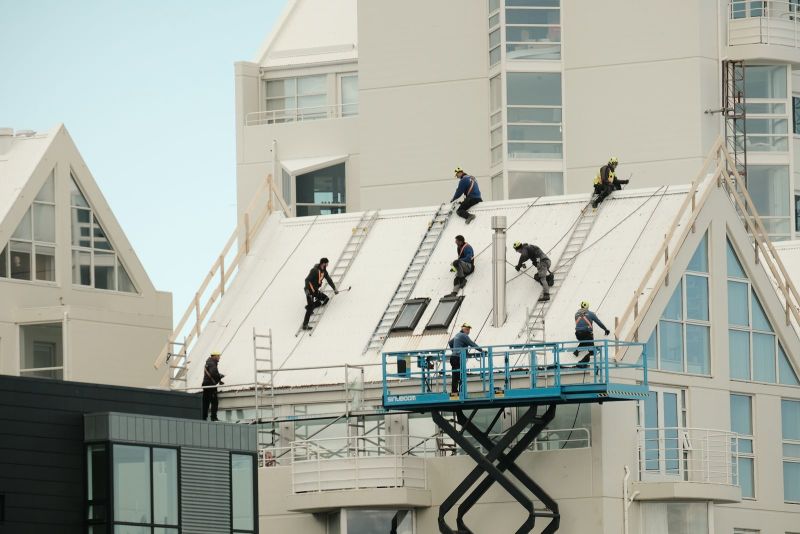
Clear gutters twice a year, autumn and spring - blocked gutters back water up under the tiles and are behind a surprising number of "sudden" leaks. Book a ground-level or drone roof check each autumn before the storm season; a roofer spotting three loose tiles in October for £80 prevents a 2am tarp job in January. After any named storm or gust event over 50mph, do a quick ground check for displaced tiles and debris in the garden and gutters. The Met Office issues named-storm warnings for the South West most winters, and treating each one as a prompt to glance at your roof catches problems while they're cheap.
If your roof is over 20 years old or you've had more than one leak in two winters, it's worth getting a proper condition survey rather than repairing reactively each time - a pattern of leaks usually points to failing fixings across a whole slope, not bad luck.
FAQ
Q: How much does an emergency roof repair cost in Taunton?
A: An emergency callout and temporary make-safe (tarpaulin or seal) typically costs £150-£400 in Taunton, with a 25-50% out-of-hours premium during storms. A same-visit small repair adds £120-£250, and scaffold access can add £400-£900. The permanent follow-up repair is quoted separately.
Q: What should I do first when my roof starts leaking?
A: Protect the inside first. Move belongings clear, get a bucket under the drip, and if a ceiling is bulging, pierce the centre to drain it in a controlled way. Turn off electrics to the area if water is near wiring. Then photograph everything and call a roofer - don't climb onto a wet roof yourself.
Q: Will my home insurance cover an emergency roof repair?
A: Storm damage is generally covered; gradual wear and tear is not. If tiles were stripped by a specific storm with gusts over roughly 47-55mph, photograph the damage promptly, keep any fallen tiles, and report it quickly. Around 1 in 5 emergency jobs becomes an insurance claim.
Q: Can a roof leak be fixed in the rain?
A: A roofer can usually make it watertight temporarily in wet weather with a tarpaulin or sealant, but a proper permanent repair needs dry conditions and daylight. Expect a two-stage job: stabilise now, repair properly within a few weeks.
Q: How quickly can someone come out for an emergency roof leak in Taunton?
A: Somerset has a reasonable supply of roofing firms, so a genuine emergency can often be attended same-day or within 24 hours outside of a major storm. During a named-storm surge, demand spikes 3-4 times and waits stretch, which is why having a local number saved in advance helps.
Ready to work with Roof Repairs Taunton?
Let's connect! We’re here to help.
Send us a message and we’ll be in touch.
Or give us a call today at 01823 746216
Agency Contact Form
More Marketing Tips, Tricks & Tools