Lead Flashing Repairs in Taunton: What Fails and What It Costs
Ask a Taunton roofer where most leaks actually start and they won't say the tiles - they'll say the flashing. Lead flashing is the metal you see around chimneys, in valleys, and where a roof meets a wall, and it's the single most common source of roof leaks in older homes. Industry figures suggest flashing faults are behind roughly 60-70% of the leaks that aren't caused by an obvious storm event. Taunton makes it worse: with 900-1,000mm of rain a year coming off the Blackdowns and Quantocks - close to a third above the England average - water hunts out every failing lead joint the town's Victorian terraces and postwar estates can offer. The good news is that lead is repairable, often cheaply, if you catch it early. A localised flashing repair in the Taunton area typically costs £150-£400, while a full chimney re-lead runs £400-£900. Here's what fails, why, and what you should expect to pay.
What Lead Flashing Actually Does
Flashing is the weatherproofing at the joints of a roof - the awkward spots where two surfaces meet and water wants to get in. Lead is the traditional material because it's soft enough to dress tightly over tiles and into brickwork, and it lasts a long time: good lead flashing can see 40-60 years before it needs replacing. You'll find it around chimneys, in the valleys between two roof slopes, along the join where a lower roof meets a wall, and around roof windows.
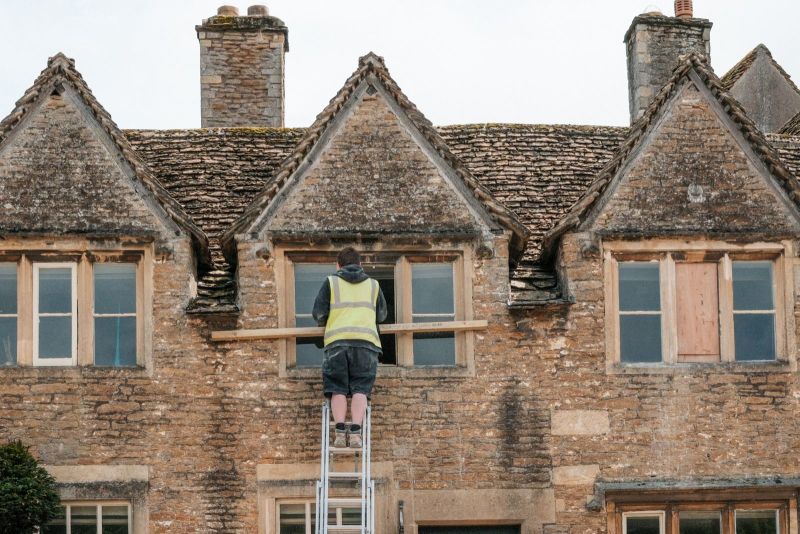
The reason it matters so much is that these joints carry a huge share of the water running off a roof. A valley on a Taunton terrace can funnel the runoff from two full slopes into one narrow channel, so any weakness there leaks heavily and fast. If you've spotted a stain near a chimney breast or a party wall, the flashing is the first suspect, and the team at Roof Repairs Taunton can check it before a small fault becomes a rotten ceiling.
Around 30% of the flashing we replace was never the problem - it was the mortar or the fixing around it. Diagnosis matters as much as the repair.
Why Lead Flashing Fails in Taunton
Lead itself rarely wears out first. What fails is the joint between the lead and the building, and Taunton's climate is hard on exactly that. The most common failure is the mortar that holds the top edge of the flashing into the brickwork - the "flaunching" or pointing - which cracks and washes out over years of heavy rain. Once that lets go, the lead lifts and water runs straight behind it.

Somerset's mild, wet winters are unusually tough here. Lead expands and contracts a lot with temperature - a phenomenon called thermal movement - and a long stretch on the same fixing, common on older Taunton chimneys, cracks along the fold from constant flexing. Frequent wet-then-mild cycles work the metal harder than a steady cold winter would. Around 40% of the flashing failures we see are cracked lead from oversized, overlong sheets fitted without proper joints, a classic sign of a cheap original install.
Storm Damage and Lifted Flashing
Taunton's exposure to Atlantic gusts - 45-55mph most winters, higher in named storms - lifts poorly fixed flashing the same way it lifts ridge tiles. Once wind gets under a loose apron of lead it peels it back, and the next downpour pours straight in. After any named storm, a quick ground-level look at your chimney flashing is worth the five minutes.
The Signs Your Flashing Is Going
You can spot most flashing problems from the ground with a decent pair of eyes or a phone zoom, long before they leak. The tell-tale signs are a strip of lead visibly lifted or curled away from a wall or chimney, white staining or crumbling mortar along the top edge, or a dark damp patch on a ceiling or wall directly below a chimney, valley, or roof-to-wall join.

Inside, look for staining on the chimney breast, on the wall where an extension meets the main house, or around a loft where daylight shows through at a joint. Roughly 1 in 4 damp problems blamed on "rising damp" in older Taunton homes is actually flashing failure letting water in higher up and tracking down. It pays to rule out the roof before you spend on a damp-proof course you may not need.
The earlier you catch it, the cheaper it is. A repointing job caught early is a fraction of the cost of the ceiling repair, redecoration, and timber drying that a season of ignored leaking brings.
What Lead Flashing Repairs Cost in Taunton
Here's a realistic 2026 picture for the Taunton area, covering the common jobs:
Re-point / re-mortar existing flashing (minor): £150-£300. Raking out and re-pointing the top edge where the mortar has failed but the lead is sound.
Localised flashing repair or re-dress: £200-£400. Lifting, re-dressing, and re-securing a section of lead, or patching a small split.
Full chimney re-lead (all four sides): £400-£900 depending on chimney size and access.
Valley re-lead: £400-£800 for a standard valley, more if the tiles either side need lifting and relaying.
Roof-to-wall abutment re-flash (extension join): £300-£600 depending on length.
Add for scaffold or tower access: £300-£800, and often unavoidable on a two or three-storey Taunton terrace where you can't safely reach a chimney off a ladder.
Access is usually the biggest single factor, not the lead - a chimney stack in the middle of a roof needs a scaffold to reach safely, and that's often more than the lead work itself. The metal is cheap; getting a roofer safely to it is where the money goes. Lead is also priced by weight and grade, and using the correct code (thickness) for the position matters - undersized lead is a false economy that fails early.
Repair or Replace: Making the Call
Not every failing flashing needs ripping out. If the lead is sound and only the mortar has gone, re-pointing at £150-£300 buys you years and is the obvious choice. If the lead is cracked, holed, or was fitted in oversized sheets without joints, a re-lead is the honest fix - patching cracked lead just moves the leak along.
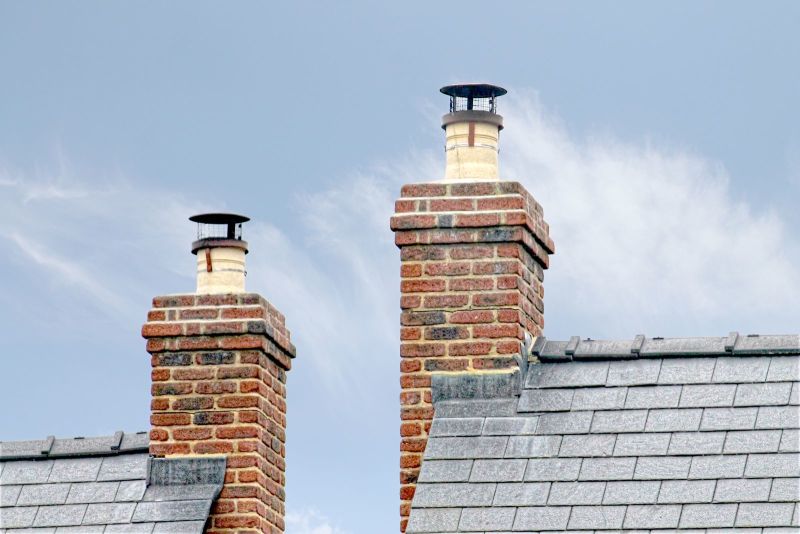
A rough rule: if the flashing is over 40 years old, has multiple cracks, or has been patched before, replace it properly rather than chasing leaks year after year. Repeated small repairs on the same chimney usually cost more over five years than one good re-lead would have. Good lead work should follow recognised standards, and the Lead Sheet Training Academy's guidance on correct lead codes and detailing is the benchmark competent roofers work to.
When you do replace, insist on proper lead - not a cheap substitute - and check the work is guaranteed. A well-detailed re-lead should outlast the next two owners.
Choosing the Right Roofer for Lead Work
Lead is a craft skill, and the gap between a good and a bad flashing job is enormous. Bad lead work - oversized sheets, no proper joints, mortar slapped over the top - is the very thing that causes most of the failures in this article, so hiring cheap is how you end up back here in five years.
Look for a roofer who talks about lead codes, welts, and joint spacing without prompting, and who's registered with a recognised scheme. The government-backed TrustMark register of vetted tradespeople is a sensible place to start, and the National Federation of Roofing Contractors' advice on finding a competent contractor is worth reading before you get quotes. Somerset has a healthy supply of general roofers, but fewer who are genuinely strong on traditional lead - worth asking to see photos of past chimney and valley jobs.
Get the work in writing with the lead code specified, and don't be tempted by the cheapest quote if it skips the scaffold or glosses over how the joints will be formed. On flashing, the detail is the job.
FAQ
Q: How much does lead flashing repair cost in Taunton?
A: A minor re-point of failed mortar around sound lead costs £150-£300 in Taunton. A localised flashing repair or re-dress runs £200-£400, a full chimney re-lead £400-£900, and a valley re-lead £400-£800. Scaffold access, often needed on two or three-storey terraces, adds £300-£800.
Q: How long does lead flashing last?
A: Good quality lead flashing lasts 40-60 years, but the mortar joint holding it into the brickwork fails much sooner - often within 15-20 years in Taunton's heavy rainfall. Most "flashing repairs" are really re-pointing that failed mortar rather than replacing the lead itself.
Q: What are the signs my flashing is leaking?
A: Look for lead visibly lifted or curled away from a chimney or wall, crumbling white mortar along its top edge, and damp patches on ceilings or walls directly below a chimney, valley, or roof-to-wall join. Roughly 1 in 4 damp problems blamed on rising damp in older Taunton homes is actually flashing failure.
Q: Why does flashing fail so often in Somerset?
A: Taunton gets 900-1,000mm of rain a year, close to a third above the England average, which washes out the mortar joints holding the lead. Mild, wet winters also drive constant thermal movement in the lead, cracking overlong sheets, and Atlantic gusts of 45-55mph lift poorly fixed flashing.
Q: Should I repair or replace my lead flashing?
A: If the lead is sound and only the mortar has failed, re-pointing at £150-£300 is the right call. If the lead is cracked, holed, over 40 years old, or has been patched before, a full re-lead is more cost-effective than chasing leaks year after year. Insist on the correct lead code and a written guarantee.
Ready to work with Roof Repairs Taunton?
Let's connect! We’re here to help.
Send us a message and we’ll be in touch.
Or give us a call today at 01823 746216
Agency Contact Form
More Marketing Tips, Tricks & Tools