Bungalow Roof Repairs in Taunton: Low-Pitch Tiles, Hipped Roofs, Dormer Bungalows and 2026 Costs
Bungalow roof repairs in Taunton are a bigger slice of our work than most people would guess. A lot of the town's outer housing went up between the 1950s and the 1980s, and you'll find whole roads of bungalows around Staplegrove, Trull, Bishops Hull, Monkton Heathfield and out towards Wellington. Most still have their first roof, so the tiles, underlay and mortar are 40-70 years old. Roughly a quarter of Somerset's residents are over 65, compared with under a fifth across England, and plenty of them live in these bungalows and can't easily get a look at their own roof. Taunton gets around 800mm of rain a year. That's less than the UK average, but it arrives as long, blustery spells that drive water sideways into shallow roofs. Below we go through the faults that mostly turn up on bungalows, what each one costs to fix in 2026, and the point where patching stops being worth it.
Why Taunton's Bungalows Need a Different Kind of Roof Repair
The first thing to know is how much roof a bungalow has. A two-storey house with 100 square metres of floor space puts half of that under its roof. A bungalow with the same floor space has all of it under the roof, plus the overhangs. Once you allow for the shallower pitch, a typical bungalow ends up with 110-120 square metres of roof slope, against 65-75 on a two-storey house. That's close to twice as much.

So bungalows have more tiles, more hip and ridge, and more fascia board for every room inside. They also tend to have lower pitches, often 20-25 degrees rather than the 35-45 degrees on older houses, and that changes how rain behaves on them. On the plus side, the eaves sit only 2.2-2.5 metres off the ground, so getting up there costs far less.
If you've noticed a stain on a bungalow ceiling or tiles on the lawn, Roof Repairs Taunton can come out and look at the roof properly, usually from a ladder or tower on the same visit.
Low-Pitch Concrete Tiles and Wind-Driven Rain
Most 1960s-80s bungalows in Taunton were roofed with concrete interlocking tiles. They were cheap and quick to lay, and they were designed for shallow roofs. Each tile has a rated minimum pitch, often somewhere between 17.5 and 22.5 degrees, and many bungalows were built only a few degrees above that figure.

That leaves very little margin. On a steep roof, water runs off fast. On a shallow one it moves slowly, and a strong westerly can push it uphill under the tile laps and through the side interlocks. When the tiles were new, the interlocks had crisp edges that stopped this. After 50 years of frost, moss and weathering, those edges have worn down, and wind-driven rain gets through.
The pattern to watch for
A typical low-pitch leak only shows up in wind and rain together. You'll get a damp patch after a stormy night in November but not after a calm, wet week. The stain is often on the side of the house facing the weather, which in Taunton usually means the west or south-west. Fronts come in off the Atlantic and pass over the Blackdowns and the Quantocks, and the Vale gets long spells of it from October through March. That wet season is about as long as the UK average, but it feels longer here because the rain tends to be soft, steady and sideways rather than short bursts.
Swapping a few cracked tiles won't fix a roof that's leaking through worn interlocks. You need a roofer to tell you whether it's a handful of damaged tiles (around £150-£350 to sort) or the whole covering reaching the end of its life.
Hipped Bungalow Roofs: Hip Tiles, Hip Irons and Mortar
Most detached bungalows have hipped roofs, sloping down on all four sides. That's great for wind, but it means lots of hip. A typical hipped bungalow has four hips and a short ridge, which can add up to 20-30 metres of tiles bedded in mortar.
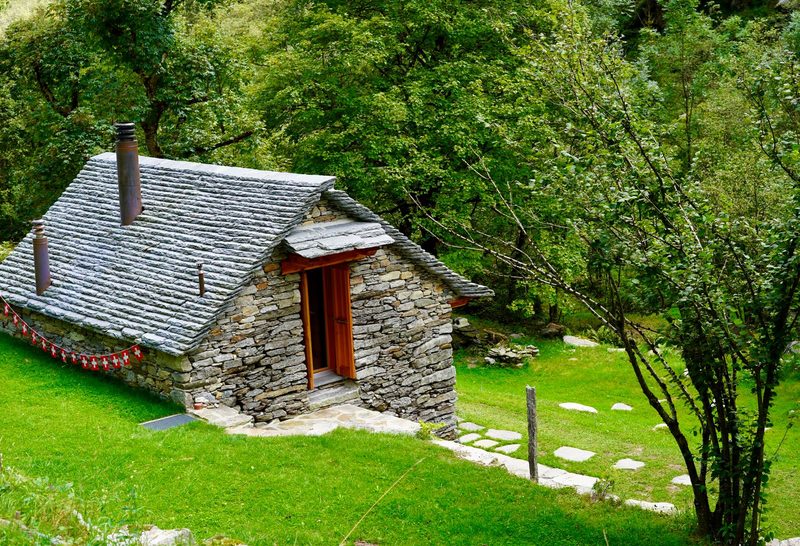
Original mortar from the 1960s and 70s was usually a fairly weak sand and cement mix. After 50-plus years it shrinks, cracks and lets go of the tile. Water then gets into the bed and freezes, which speeds the whole thing up. The first sign is often a hip tile sitting slightly out of line, or bits of mortar on the path below.
At the bottom of each hip there should be a hip iron, a small galvanised steel strap screwed to the hip rafter that stops the lowest hip tile from sliding off. On many old bungalows these have rusted thin or were never fitted. When the mortar fails, that bottom tile, which weighs 4-5kg, can come down onto a path or driveway. We pick a fair few of them out of flowerbeds every winter. A new hip iron costs very little if the roofer is already up there re-bedding the hip.
Since 2015, the British Standard for slating and tiling has said that hip and ridge tiles need a mechanical fixing as well as mortar. So when your hips are redone, ask whether they'll be screwed or clipped. Many owners go for a dry hip system instead, which uses no mortar at all and needs very little upkeep.
Dormer and Chalet Bungalows: Cheeks, Flat Tops and Hidden Leaks
Chalet or dormer bungalows have rooms in the roof, lit by dormer windows. They give you more space, but they also have more places for water to get in, and they cause about a third of the bungalow leaks we're called out to.
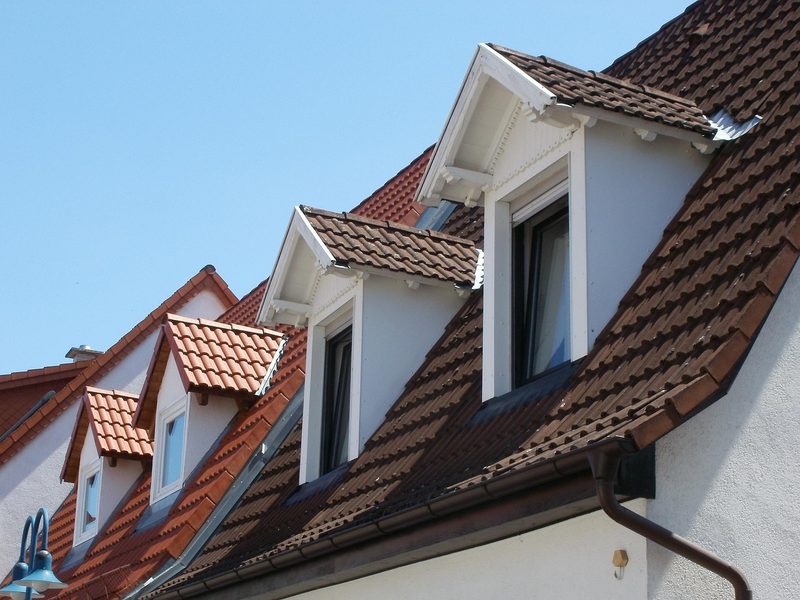
Three parts usually cause the trouble:
- The cheeks, which are the triangular side walls of the dormer. They're often clad in hanging tiles, timber boards or uPVC, with lead soakers where they meet the main roof slope. When the soakers go, water runs down inside the cheek and shows up as a stain on the bedroom wall, nowhere near the window.
- The flat top. Most dormers from this period have a felt flat roof. Felt lasts 15-25 years, so many are on their second or third covering. Blisters, splits and soft spots mean the deck underneath may be wet.
- The front apron, the lead strip under the dormer window where it meets the tiles. If it has lifted or cracked, water gets in behind the frame.
Dormer cheeks are also often thin and badly insulated, so the bedroom upstairs can get condensation that looks just like a leak. A good roofer will check both before quoting.
Fascias, Soffits and Box Ends at Low Eaves
Because bungalow eaves are so low, the timber boards along them get splashed, shaded by shrubs and soaked by overflowing gutters. Original painted softwood fascias often rot along the bottom edge after 30-40 years, and gutter brackets then lose their grip.

On gable-ended bungalows, look at the box ends, the little boxed-in corners where the fascia meets the gable wall. They're made from offcuts and end grain, which soaks up water, and they're often the first thing to fall apart. Expect £200-£400 per corner to rebuild one in timber or replace it with a uPVC box end.
One thing to check before anyone pulls off old soffit boards on a bungalow built before 2000: some were made from asbestos cement. A sample test costs around £50-£100 and is worth doing first.
Eaves felt that's crumbled away
Low eaves also show up another common bungalow fault, the strip of roofing felt that runs into the gutter. On old roofs this felt has usually rotted, so water drips behind the gutter and down the fascia. We've written up how underlay fails at the eaves and what re-felting costs in Taunton if you want the detail. On a bungalow, eaves felt support trays can often be fitted along one side for £400-£900 without disturbing the rest of the roof.
Access and 2026 Costs for Bungalow Roof Repairs in Taunton
Low eaves are where bungalows really save you money. Most small repairs can be done from a ladder with a roof ladder hooked over the ridge, or from a mobile scaffold tower that costs £150-£300 to hire for a week. For bigger jobs, a run of edge protection around the eaves usually costs £800-£1,800 for a bungalow, against £2,500-£4,000 for a full scaffold round a two-storey house.

Typical prices including VAT:
- Replace a few slipped or cracked concrete tiles: £150-£350
- Re-bed and re-point one hip, with a new hip iron: £250-£450
- Re-bed all hips and the ridge on a hipped bungalow: £700-£1,400
- Fit a dry hip and ridge system to a whole bungalow: £1,000-£2,000
- Re-cover a flat dormer top in GRP or EPDM: £700-£1,600
- Re-clad and re-flash one dormer cheek: £600-£1,500
- New uPVC fascias, soffits and gutters on a detached bungalow: £2,500-£4,500
- Re-roof a 2-bed semi-detached bungalow: £8,000-£12,000
- Re-roof a 3-bed detached hipped bungalow: £11,000-£17,000
- Re-roof a chalet bungalow with dormers: £14,000-£22,000
Taunton prices sit close to the national average. What isn't average is the wait. Somerset has fewer roofers per household than the big cities, and good local firms are often booked 3-6 weeks ahead for repairs in autumn and 2-3 months ahead for full re-roofs in spring.
When Re-Roofing the Whole Bungalow Beats Patching It
With twice the roof area, bungalow owners can spend a lot on repairs that move the problem around rather than fix it. As a rough rule, if you're facing repairs in three or more different places, or you've spent more than about a quarter of the cost of a new roof in the last five years, it's time to get a re-roof price.

Other signs the roof is done:
- The concrete tiles have lost their surface and feel rough and sandy, or snap when walked on.
- The underlay is the old black bitumen felt and it's torn or missing above the gutters.
- Leaks keep appearing on the weather side, each one in a new spot.
- Tiles are slipping because the nails have rusted through, often called nail sickness.
A full re-roof also lets you fix things a patch can't. You can switch to tiles rated for a lower pitch, add a breathable membrane, fit dry hips and ridges and sort out loft ventilation. Re-roofing counts as building work, and under the government's Approved Document L on conservation of fuel and power you'll normally be expected to bring the roof insulation up to modern standards where it's practical. With so much roof per room, that pays off faster on a bungalow than on most houses. Taking a bungalow loft from almost nothing up to 270mm can save a few hundred pounds a year on heating. If you already have 100mm or so, the saving from topping up is smaller, more like £30-£60 a year, but it's cheap to do while the roof is open anyway.
Getting Fair Quotes: A Few Tips for Older Homeowners
We've covered doorstep cold-callers in a separate guide, so this is just the short version for anyone arranging work on a bungalow:

- Get two or three written, itemised quotes, and ask each roofer to show you photos of the problem.
- Don't pay a large deposit up front. On small repairs you should pay nothing until the job is done.
- Look for firms that belong to a vetted body such as the National Federation of Roofing Contractors, or TrustMark.
- Ask a family member or friend to be there when the roofer visits if that helps.
If anyone turns up unannounced saying they've spotted loose tiles, Age UK's advice on doorstep scams is worth a read before you agree to anything.
Frequently Asked Questions About Bungalow Roof Repairs in Taunton
Why does my bungalow roof only leak in windy, rainy weather?
That's the classic sign of a low-pitch roof with worn tiles. Wind pushes rainwater up under the tile laps and through worn side interlocks. On calm, wet days the water runs off normally, which is why the leak comes and goes.

How much does it cost to re-roof a bungalow in Taunton in 2026?
Expect around £8,000-£12,000 for a 2-bed semi-detached bungalow, £11,000-£17,000 for a 3-bed detached hipped bungalow and £14,000-£22,000 for a chalet bungalow with dormers, including VAT and edge protection.
Is a bungalow roof cheaper to repair than a house roof?
Small repairs usually are, because the low eaves mean no full scaffold. Re-roofing can cost the same or more, though, because a bungalow has nearly twice the roof area of a two-storey house with the same floor space.
Can a dormer's flat roof be replaced without re-roofing the rest?
Yes. A flat dormer top can be stripped and re-covered in GRP or EPDM on its own, usually for £700-£1,600, as long as the lead flashings where it meets the main roof are checked at the same time.
Ready to work with Roof Repairs Taunton?
Let's connect! We’re here to help.
Send us a message and we’ll be in touch.
Or give us a call today at 01823 746216
Agency Contact Form
More Marketing Tips, Tricks & Tools