Comparing Roofing Quotes in Taunton: Why Prices Differ by Thousands and How to Read Them
Ask three roofers to price the same Taunton re-roof and you can easily get back £8,900, £11,600 and £16,200. That's a gap of more than £7,000 for what you thought was one job. Most of the time nobody is lying. They've just priced three different jobs, because nobody told them exactly which one you wanted. Comparing roofing quotes in Taunton gets easier once you know where the money hides: scaffold hire, disposal, underlay spec, VAT, ridge type and the vague "allowances" at the bottom. Taunton sees around 750-850mm of rain a year, below the UK average of about 1,160mm, but it falls over 140-160 wet days and mostly between October and March, so a roof that's priced cheaply here tends to show its shortcuts within a few winters. A full re-roof on a typical semi now runs roughly £9,000-£16,000 depending on the tile. Below, we take three sample quotes for one real-world style of job and pull them apart line by line.
Get Comparable Roofing Quotes in Taunton by Writing a Brief First
The single most useful thing you can do happens before any roofer climbs a ladder. Write down what you want, and send the same page to everyone. Without it, each firm fills the gaps with its own assumptions. One prices new tiles, one prices reusing yours, one adds new fascias because they "might as well". You end up comparing a hatchback, an estate and a van.

A brief doesn't need to be technical. It needs to stop people guessing. When we price a roof at Roof Repairs Taunton, the quotes that turn into happy customers are nearly always the ones where the homeowner told us early what mattered to them, whether that was budget, the look of the tiles or getting it done before the wet season.
A one-page brief you can send to every roofer
1. The address, house type and rough age (for example, 1930s hipped semi). 2. What's wrong now, with 4-6 photos if you can get them from the garden or an upstairs window. 3. The scope you want priced: full re-roof, or repair only, or both as separate options. 4. Tile preference: like-for-like, a specific type (concrete interlocking, clay double Roman, slate), or "advise me". 5. Whether you want ridges, hips and verges done in mortar or a dry-fix system, or both priced. 6. Anything you don't want included, such as gutters or fascias, unless listed as a separate optional line. 7. Access notes: shared drive, narrow lane, conservatory, parking, neighbours' gardens. 8. Your preferred start window. 9. A request for an itemised fixed-price quotation in writing, not a single total.
That last line does most of the work. If all three come back itemised under roughly the same headings, the comparison below takes ten minutes instead of a week of phone calls.
The Sample Job: Re-Roofing a 1930s Hipped Semi Near Taunton
For the worked example, picture a 1930s hipped-roof semi on the edge of town, the kind you'll find in their hundreds across Taunton's interwar estates. The roof area is about 75m². The original clay tiles were replaced with concrete interlocking tiles some time in the 1970s, there's a chimney stack on the party wall and a small lean-to porch roof at the front. The underlay is old bitumen felt, torn at the eaves, and the mortar ridge is cracking along about 40% of its length.
Three firms quote. These are anonymised samples built from the kind of paperwork we see homeowners bring to us, not real companies:
- Quote A, a sole trader, not VAT registered: £8,900, one page, mostly a total.
- Quote B, a small VAT-registered firm: £11,640 including VAT, itemised over two pages.
- Quote C, a larger firm: £16,240 including VAT, glossy, with a few optional extras folded into the main price.
On the face of it, A looks like a £7,340 saving over C. Let's see how much of that survives.
Comparing Roofing Quotes Line by Line
Go down each quote with a highlighter and mark the same nine items on every one. Where a quote is silent on an item, assume it isn't included until the roofer tells you in writing that it is.

Scaffold
Quote A says "scaffold included". Quote B lists £1,250 for erect, 6 weeks' hire and dismantle, then £45 a week beyond that. Quote C includes scaffold with a "standard hire period", undefined. A semi of this size usually needs £900-£1,600 of scaffold, and the hire period matters more than people expect. In a Somerset November, a 10-day job on paper can easily stretch to 3 weeks with rain days. B is the only one who told you what happens then.
Stripping, skips and disposal
Stripping 75m² of concrete tiles and old felt fills roughly 2-3 large skips. B prices £1,100 for strip and disposal, including skips. A says "strip and clear", with no mention of where the waste goes. C includes it. If a skip has to sit on the road rather than your drive, it needs a permit from Somerset Council, which is an extra fee and a lead time of a week or so. Ask who applies for it and who pays.
Underlay, battens and BS 5534
This is where cheap quotes save the most money and you see the least of it. Quote A says "new felt and battens". B names a breathable membrane rated for the site's wind zone and specifies treated 25x50mm battens graded and marked to BS 5534. C does the same. BS 5534 is the British Standard code of practice for slating and tiling, and its 2014 revision tightened the rules on fixing: every tile in most situations now needs a mechanical fix, and ridge and hip tiles can't rely on mortar alone. A quote that doesn't mention it isn't necessarily non-compliant, but you've no way of holding the roofer to it.
Tiles: new, reused or a different tile entirely
A plans to reuse "sound tiles" and top up with second-hand ones. That can be fine with clay, but 50-year-old concrete interlocking tiles are often worn thin and porous, and a 20-30% breakage rate on stripping is common. B prices all new concrete interlocking tiles. C has priced clay double Romans, because their surveyor thought they'd suit the house better. That alone is worth around £2,500-£3,500 on a roof this size. It might be a good suggestion, but it's a different job, and it's exactly why you send a brief.
Ridge, hips and verges
A prices a mortar-bedded ridge and hips and mortar verges. B and C both use dry-fix systems. Dry ridge and verge kits add roughly £600-£1,000 to a semi of this size, and in Taunton's wind-driven rain they generally last longer without maintenance. Mortar isn't wrong, but if it's used it should still be mechanically fixed to meet BS 5534.
Leadwork
The chimney needs new flashings. A says "lead where needed". B specifies Code 4 lead for the step and cover flashings and Code 5 for the back gutter and apron. C says Code 4 throughout. Lead codes refer to thickness: the higher the number, the heavier the sheet. Code 4 for flashings and Code 5 for aprons and back gutters is a sensible spec. "Where needed" lets anyone use the thinnest lead they have in the van.
Timber allowances
Nobody can see every rafter and fascia board until the tiles are off, so a good quote says what happens when rotten timber turns up. B includes a provisional sum of £400 for timber repairs, with a rate of £35 per linear metre for replacement rafter or batten work. C allows "minor timber repairs". A says nothing, which usually means a phone call from the roof halfway through the job asking for more money.
VAT, guarantee and payment terms
A isn't VAT registered, which is legitimate if their turnover is under the £90,000 threshold. That's a genuine 20% saving, not a trick. B and C both include VAT. On guarantees, A offers "10 years" verbally, B a 15-year written workmanship guarantee, C a 15-year guarantee that's insurance-backed, so it survives if the firm closes. We've covered the differences between these in more detail in our guide to what a 20-year roofing warranty in Taunton actually covers, which is worth reading before you put weight on a big number.
Payment terms vary just as much. A wants 50% up front. B wants 10% to book and the balance on completion. C asks for 30% deposit. On a re-roof, anything above about 25% before work starts is a risk you're carrying for the roofer.
What the gap looks like once you level the quotes
Take the clay tile premium and a £1,900 fascia, soffit and gutter package out of C, and it drops to roughly £11,700. Add dry ridge and verge, proper lead, a realistic timber allowance and some replacement tiles to A, and it climbs to around £10,300-£10,800. The £7,340 gap shrinks to about £1,200. B and C end up within £100 of each other, and B has the clearest paperwork of the three.
PC Sums, Provisional Sums and Contingencies Explained
These terms appear on most roofing quotes in Taunton, and they're where final bills drift away from the original figure.

A provisional sum is money set aside for work that's expected but can't be measured yet, like the £400 for timber in Quote B. When the roof's open, the roofer charges what's actually used, up or down. A PC sum, short for prime cost, is an allowance for a specific item you haven't chosen yet, usually materials. If a quote says "PC sum £1,800 for tiles" and you then choose a tile that costs £2,600, you pay the difference, often with a handling percentage of 10-15% on top. A contingency is a general buffer, typically 5-10% of the job, for the unknown.
None of these is bad on its own. The trouble starts when a quote leans on them so heavily that the "fixed price" is really a guess. If more than about 15% of the total is provisional or PC, ask the roofer to firm it up or explain why they can't.
Red Flags in a Roofing Quote
Some things should make you pause, whatever the price:

- A single total with no breakdown, especially over £3,000.
- Words like "approximately", "estimate" or "from" on what's supposed to be a fixed quotation.
- No mention of underlay type, batten grade or BS 5534.
- "Lead where needed", "repairs as required" or other open-ended phrases with no price attached.
- Deposits above 25-30%, or cash-only payment with no VAT receipt where VAT has been charged.
- No business address, or only a mobile number.
- Pressure to sign today, or a "discount" that expires when they leave your drive.
- A guarantee that's verbal only.
Under the Consumer Rights Act 2015, section 50, what a trader tells you about a service can become part of the contract if you rely on it when deciding. That's useful, but proving a conversation on a driveway is hard. If something matters to you, get it written into the quote.
If you sign at your kitchen table rather than at the roofer's premises, you normally have a 14-day cooling-off period under the Consumer Contracts Regulations 2013, and the roofer should tell you that in writing. A firm that "forgets" to mention it, or starts work the next morning without asking you to agree to that in writing, is telling you how they handle paperwork generally.
How Somerset Weather and Rural Access Change the Price
Two Taunton re-roofs with the same roof area can differ by 10-20% just because of where they are.
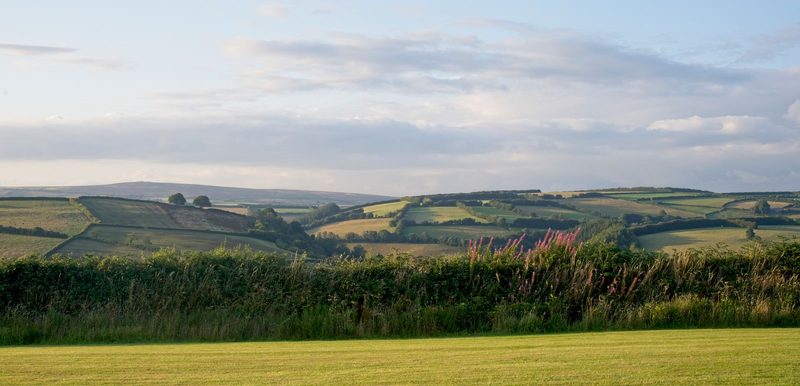
Weather is the first factor. Taunton itself sits in the vale, but the Quantocks to the north and the Blackdown Hills to the south both get well over 1,000mm of rain a year, and villages on the edge of Exmoor get more again. Between October and March a roofer might lose 1-2 days in every 5 to rain or wind, so winter quotes either build in extra scaffold hire and temporary protection or they don't, and you find out later. A roof stripped in December needs a temporary cover every night. Ask how they'll do that.
Access is the second. Out in the villages, plenty of houses sit on single-track lanes where a scaffold lorry can't get within 50 metres, or a skip can't be dropped at all. That means carrying tiles and waste by hand, using smaller vehicles and more trips, which can add £500-£1,500 to a re-roof. Parking restrictions on tighter town streets do the same thing on a smaller scale. A roofer who hasn't visited the site can't price any of this, so treat a quote given purely from photos as a starting figure.
Then there's supply and demand. Taunton has a decent number of established roofing firms, but after a big autumn storm the good ones can be booked 6-10 weeks ahead, and prices for spring starts tend to firm up by February. Firms registered with the Government-endorsed TrustMark scheme have had their trading practices and workmanship checked, which narrows the field quickly when you're short on time.
What Roofing Quotes in Taunton Typically Come To in 2026
These are rough bands for full jobs on common Taunton house types, including VAT and scaffold, assuming normal access:
- Re-roof, 1930s semi, concrete interlocking tiles: £9,000-£14,000
- Re-roof, same house, clay double Roman tiles: £12,500-£18,500
- Re-roof, same house, natural slate: £15,000-£24,000
- Re-roof, Victorian mid-terrace, slate: £8,000-£13,000
- Re-roof, detached 4-bed, concrete tiles: £14,000-£22,000
- Scaffold only for a typical semi: £900-£1,600
- Dry ridge and hip system on a semi, as a standalone job: £1,200-£2,200
If your three quotes all land inside the same band once you've levelled them, any of them could be fair. If one sits 30% below the rest, find out what's missing before you get excited.
Questions to ask before you sign
Ask each roofer the same handful of questions and write the answers on their quote:
1. How many weeks of scaffold hire are included, and what's the weekly rate after that? 2. What underlay and battens are you using, and will the job meet BS 5534? 3. What happens, and what does it cost, if you find rotten timber? 4. Who applies for and pays for any skip or scaffold permit? 5. Is the guarantee written, and is it insurance-backed? 6. How will the roof be kept watertight overnight while it's stripped?
Good roofers like these questions, because they show you're comparing properly rather than just picking the cheapest number.
Frequently Asked Questions About Comparing Roofing Quotes in Taunton
How many roofing quotes should I get in Taunton?
Three is usually enough for a re-roof, as long as all three are working from the same brief. More than four tends to confuse things rather than help, and good local firms are less keen to quote when they know they're one of eight.
Why is one roofing quote so much cheaper than the others?
Usually because it leaves things out or assumes a different job, such as reusing old tiles, mortar ridges instead of dry-fix, thinner lead or no timber allowance. Sometimes it's simply because the roofer isn't VAT registered, which can make a genuine 20% difference.
What is a provisional sum on a roofing quote?
It's money set aside for work the roofer expects but can't measure until the roof is open, most often timber repairs. You pay for what's actually used, so it can go up or down. Ask for the rate they'll charge so you can check the final figure.
Should I pay a deposit for roofing work?
A small deposit of 10-25% to secure materials and a start date is normal on larger jobs. Be wary of anyone asking for 50% or more before work starts, and always pay in a way that leaves a record.
Ready to work with Roof Repairs Taunton?
Let's connect! We’re here to help.
Send us a message and we’ll be in touch.
Or give us a call today at 01823 746216
Agency Contact Form
More Marketing Tips, Tricks & Tools