Roof Felt Replacement in Taunton: Underlay Failure, Eaves Repairs, Re-Felting and 2026 Costs
Most people in Taunton never think about the layer under their tiles until they go into the loft for the Christmas decorations and see daylight. That layer is the underlay, usually called roofing felt, and on a lot of local homes it's now 40-70 years old. The black bitumen felt fitted to most 1950s-1980s houses was never designed to last forever, and in our experience it typically starts to break down somewhere between 30 and 50 years, starting at the eaves. Taunton gets around 750-850mm of rain a year, which is below the UK average of roughly 1,160mm, but it falls over 140-160 wet days, and south-westerly winds off the Bristol Channel drive it under tiles more often than the totals suggest. Roof felt replacement in Taunton can mean a £400 eaves repair or a £9,000 strip and re-felt. Here's how to tell which one your roof needs, and what each costs in 2026.
Roof Felt Replacement in Taunton: What the Underlay Actually Does
Tiles and slates are the main waterproof layer on a pitched roof. They aren't perfect, though. Wind-driven rain, powdery snow and the odd cracked tile all let a little water past, and the underlay is the second line of defence that catches it. It runs horizontally across the rafters in overlapping strips, drapes slightly between each rafter, and carries any water down and out into the gutter. It also cuts wind pressure under the tiles, which matters on exposed roofs, because tiles with a sound underlay beneath them are far less likely to lift in a gale.
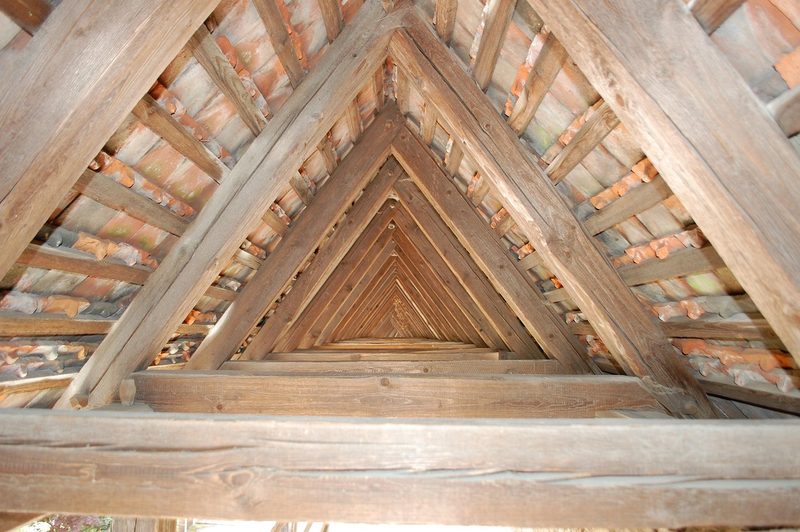
On a typical Taunton semi with a 60-70m² roof, the underlay is maybe 5% of the cost of a new roof, but when it fails the bill lands on everything below it: battens, rafter ends, fascia boards, loft insulation and eventually your bedroom ceiling. A soaked 270mm layer of loft insulation loses most of its insulating value and can take weeks to dry, if it dries at all. If you're not sure what state yours is in, Roof Repairs Taunton can check the loft and the eaves and tell you honestly whether you need a repair at all.
The good news is that underlay rarely fails all at once. It goes at the bottom first, and catching it there is much cheaper.
Old Bitumen Felt on Post-War Taunton Homes: Why the Eaves Go First
A large share of Taunton's housing went up between the late 1940s and the 1980s: council estates, private semis, bungalows on the edges of town and the villages around it. Nearly all of these roofs were felted with bitumen sheet, first the older hessian-based kind and later the reinforced type known as 1F. Many were also re-roofed in concrete interlocking tiles at some point, often on top of the original felt and battens.
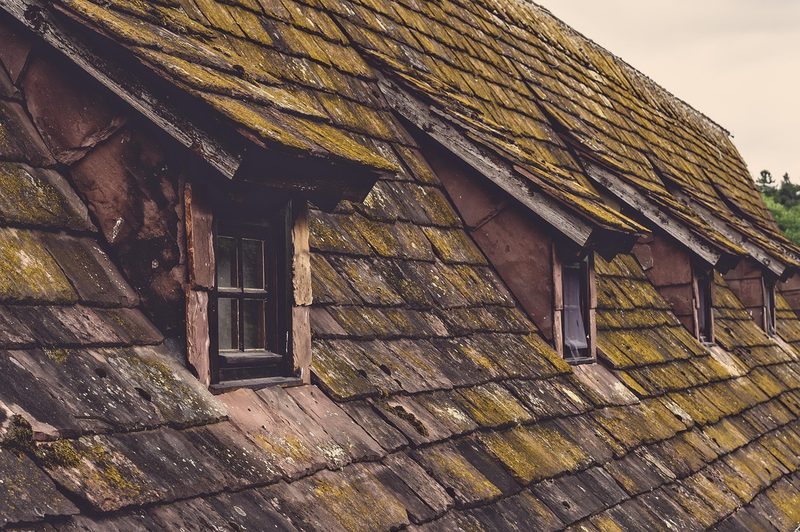
Bitumen felt fails where it gets sun. At the eaves, the felt is meant to run over the fascia and into the gutter so water drips straight in. That bottom 150-300mm is the only part of the underlay exposed to daylight, and UV turns it brittle within 20-30 years. It cracks, crumbles and eventually breaks off completely, leaving a gap where water runs down the back of the fascia instead of into the gutter. Roofers call it eaves felt rot. You'll often see it from the garden as black ragged strips poking out under the bottom row of tiles, or bits of felt lying in the gutter.
Once that gap opens, rain blown under the bottom course drips onto the wall plate and rafter feet. On a damp south-west-facing slope in Somerset, rafter ends can go soft in 5-10 years of this. That's when an eaves repair turns into a carpentry job. We'd guess more than half the post-war roofs we look at around Taunton have some degree of eaves felt rot, and it's often the real cause of damp patches high up in a bedroom corner.
Felt that's tearing further up the roof
Further up, old felt tends to go brittle and split along the rafters, or sag badly between them where battens have been nailed through it. A gentle drape of 10-15mm is normal and intended. Felt sagging 50mm or more, or torn and flapping, is not doing its job.
Pre-War Roofs With No Underlay at All
Roofing felt only became standard in the UK from roughly the 1930s onwards, so many Victorian and Edwardian terraces in Taunton, and older cottages out in the villages, were built with no underlay whatsoever. Their Welsh slates or clay tiles sit straight on battens, sometimes with lime mortar (called torching) pressed into the joints from inside to stop draughts and rain blowing through.
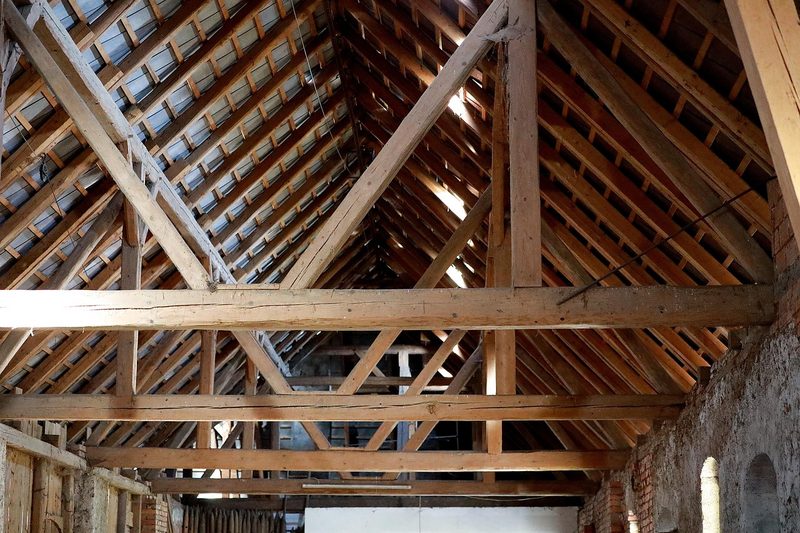
That's not automatically a problem. Plenty of these roofs have kept their houses dry for 120 years. But it does mean there is no backup. A single slipped slate lets water straight onto the ceiling below, and you can't simply add felt from inside to fix it. Felt has to go on top of the rafters and under the battens, so retrofitting underlay means taking the roof covering off.
So with a pre-war roof, the question is usually whether the slates or tiles themselves are near the end. If they're sound, we'd normally say keep up with repairs and leave it. If the roof is coming off anyway, that's when you fit an underlay for the first time. If the house is listed or in a conservation area, check with the council before choosing materials, because a change of covering may need consent.
Signs From the Loft That Your Underlay Has Failed
You can learn more about your underlay in ten minutes in the loft than from any amount of looking at the roof from the street. Take a decent torch, stand on boards or joists (never the plasterboard between them), and look for:
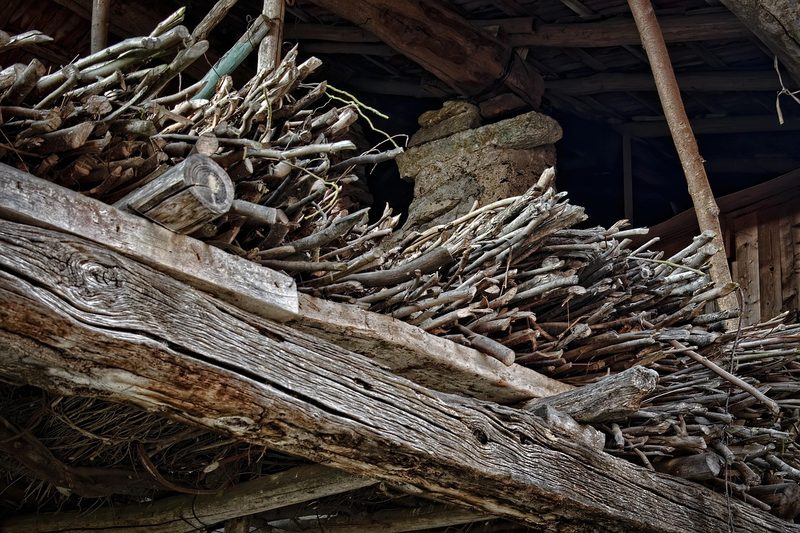
- Daylight showing through, especially low down near the eaves where the roof meets the loft floor
- Felt that's torn, split along the rafter lines, or hanging down in loose flaps
- Felt that crumbles or flakes when you touch it lightly with a gloved finger
- Dark water staining on rafters, battens or the wall plate, particularly a tide-mark pattern near the bottom of the slope
- Black dust, grit and crumbs of felt sitting on top of the insulation
- Damp, compressed or stained insulation along the eaves
- Wasps' nests or bird debris near the eaves, which tells you there's a gap they're getting through
Go up after heavy rain if you can, ideally during a south-westerly blow. Fresh drips or wet timber close to the eaves point to felt failure. Beads of water spread evenly across the whole underside of the felt on a cold morning is more likely to be condensation, which is a different problem. On a roof with no underlay at all, you'll see the backs of the slates or tiles and the battens directly, and you're looking for wet patches and rotten battens instead.
Breathable Membrane vs Traditional Felt: What Goes Back On
If your underlay is being replaced, the choice is between modern breathable membrane and traditional bitumen 1F felt. For most Taunton homes we fit a breathable membrane. It's lighter, it's tear-resistant, and it lets water vapour escape from the loft while still shedding rain. Bitumen 1F felt is cheaper per roll but completely vapour-tight, and it relies on the loft being well ventilated to stay dry.
Price isn't really the deciding factor. On a typical 65m² roof, the difference in material cost between decent membrane and 1F felt is usually £100-£250, which is small next to the labour and scaffold.
Ventilation and condensation
A breathable membrane helps a damp loft, but it doesn't cancel out the need for airflow. Somerset's humidity stays above 85% for much of the autumn and winter, and a well-insulated loft with blocked eaves will still get damp under any underlay. Most roofers still fit eaves ventilation alongside a new membrane unless the manufacturer's certification says otherwise for that roof. We've covered the causes and fixes in more detail in our guide to roof ventilation and loft condensation in Taunton, which is worth reading if your loft already looks damp.
When traditional felt is the better choice
There's one common case where we'd go back with bitumen felt: bats. Somerset has a lot of them, and bats roosting in lofts can get their claws caught in the fibres of many breathable membranes, which ecologists have been flagging for years. Where a bat survey finds a roost, the ecologist's licence conditions will often specify bitumen 1F felt. Bats and their roosts are legally protected, and the government guidance on bat surveys and licences explains when you need one before work starts.
Eaves-Only Repair or a Full Re-Felt?
This is the decision that matters most for your budget. Roughly speaking, if the felt is only rotten along the bottom edge and sound everywhere else, an eaves repair is the right call. If it's brittle, torn or sagging across most of the slope, patching the eaves just moves the problem up the roof.

Eaves felt support trays
The standard eaves repair is to remove the bottom 2-3 rows of tiles, cut back the rotten felt to sound material, and fit eaves felt support trays. These are rigid plastic trays, usually about 1.5m long, that sit on the rafter feet and carry water over the fascia into the gutter. A strip of new membrane is then lapped under the existing felt and over the trays, so water running down the old felt drops onto the new strip. The tiles go back on with new clips and nails, and any soft batten or rotten fascia is replaced at the same time.
On most two-storey houses this is a one or two day job per elevation. A competent roofer will tell you after opening up whether the felt further up is good enough to lap onto. If it crumbles when they lift it, they should stop and tell you before carrying on.
Stripping and re-felting the whole roof
A full re-felt means stripping every tile or slate down to the rafters, removing the old felt and battens, checking and repairing the rafters, fitting new underlay and new battens, then re-laying the roof. On a typical Taunton semi it takes 4-7 working days with a team of 2-3, longer on a detached house or a roof with valleys and dormers. We'd always rather do this in spring or summer, because a roof that's partly stripped needs a dry week and Taunton's wet season usually runs from October to March.
Reusing your existing tiles
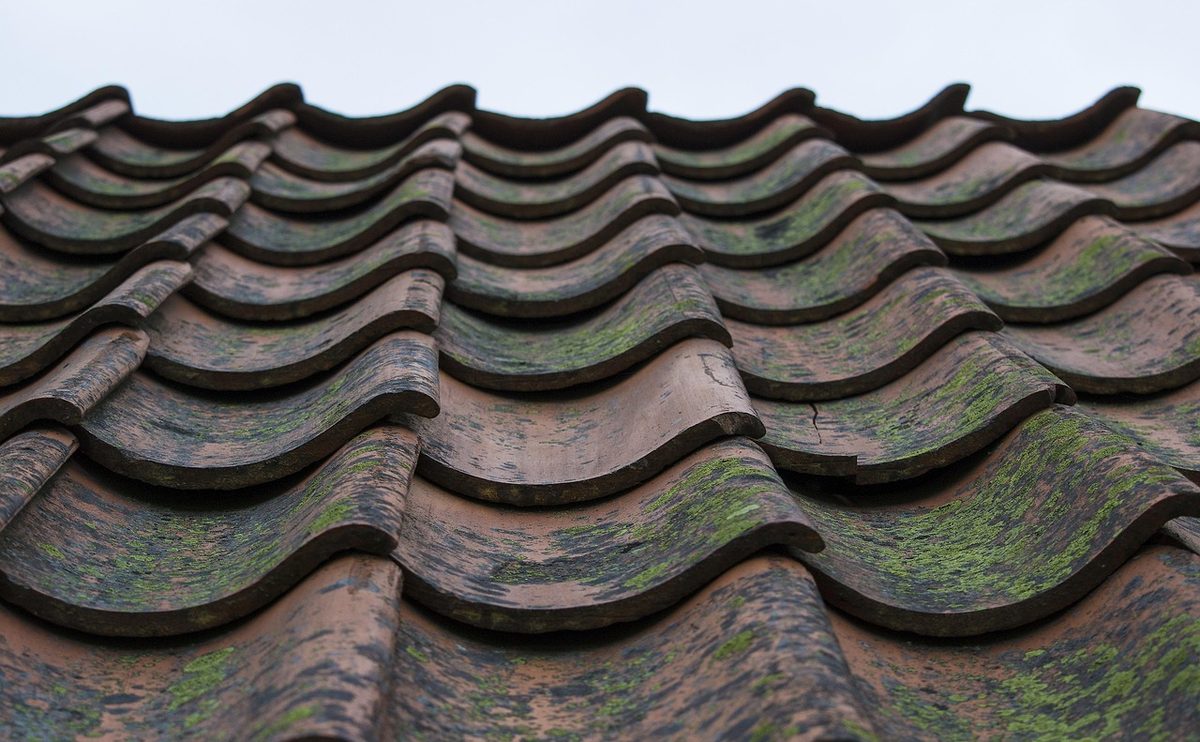
You can usually reuse the tiles, which saves a lot. Concrete interlocking tiles from the 1960s-1990s often come off with 85-95% reusable, because they're tough and the nibs rarely break. Older clay tiles, including the double Roman clay tiles that are common on older Taunton houses, are more brittle and we'd expect to lose 15-30% of them during stripping. Natural slates vary widely depending on their age and how they were fixed. Matching replacements matters, so ask your roofer how they'll source them and where the mismatched ones will go (the back slope is usual). If more than about 30% of the tiles are cracked, flaking or porous, it's often better value to fit new tiles while the roof is open.
Battens and BS 5534
Old battens almost always get replaced on a re-felt. They're usually untreated, often undersized, and full of nail holes. New battens should be graded and treated to BS 5534, the British Standard for slating and tiling, and marked as such along their length. For most tiled roofs with rafters at up to 450mm centres, that's 25 x 38mm battens; slate and plain tile roofs, or wider rafter spacing, often need 25 x 50mm. The same standard sets out how tiles must be mechanically fixed (nails and clips rather than relying on weight alone), and the ridge and hips are now normally mechanically fixed too. Ungraded timber from a builder's merchant offcut pile is not acceptable, and it's worth asking to see the markings.
Roof Felt Replacement Costs in Taunton for 2026
These are typical Taunton prices for 2026, including VAT. Your roof's pitch, height, access and the condition of the timber will move them up or down.
- Eaves felt repair with support trays, one elevation of a terraced or semi (5-9m): £400-£900, plus access
- Eaves felt repair to both front and back of a semi: £900-£1,800, plus access
- Replacing a rotten fascia board at the same time: £30-£50 per metre extra
- Scaffold for one elevation of a two-storey house: £600-£1,100
- Full strip, re-felt and re-batten of a terraced house, reusing the tiles (40-55m²): £4,000-£6,500 including scaffold
- Full strip, re-felt and re-batten of a semi, reusing the tiles (60-75m²): £5,500-£8,500 including scaffold
- The same on a detached house (90-120m²): £8,000-£13,000 including scaffold
- Replacement tiles to make up losses: £1.50-£4 each for concrete, £3-£8 each for clay double Romans, more for reclaimed slate
- Rafter repairs or splicing where timber has rotted: £80-£200 per rafter end
For comparison, a full re-roof with new tiles on a semi usually comes in at £8,000-£12,000, so on a roof where the tiles are tired anyway, the gap between re-felting and re-roofing is narrower than people expect. Good Taunton roofers are busy, especially through autumn and winter after the first storms, and lead times of 4-8 weeks for a full re-felt are normal. Book a spring slot early if you can.
Building Regulations, Insulation and Getting It Done Properly
An eaves repair doesn't need building control involvement. A full strip and re-felt is different. If you're replacing more than 25% of the roof covering, building regulations apply, and your roofer either needs to be registered with a competent person scheme that lets them self-certify or you need to notify Somerset Building Control before work starts. Either way you should get a certificate at the end, and you'll want it when you sell.
Re-roofing also counts as renovating a "thermal element" under Approved Document L of the Building Regulations, which means the roof insulation should be brought up to current standards where that's practical and pays back within a reasonable time. For most Taunton lofts that means topping up to 270-300mm of mineral wool at loft floor level, which costs a few hundred pounds and is easiest to arrange while the roofers are on site.
When you get quotes, ask each roofer to put the same things in writing: the underlay type and brand, batten size and grade, how many tiles they expect to replace, whether new eaves trays and ventilation are included, how they'll fix the tiles, and whether scaffold and waste removal are in the price. A quote that just says "re-felt roof" leaves too much room for corners to be cut, and they'll be hidden under your tiles where you'll never see them.
Frequently Asked Questions About Roof Felt Replacement in Taunton
How long does roofing felt last?
Old bitumen felt on Taunton's post-war homes typically lasts 30-50 years, though the exposed strip at the eaves often fails within 20-30 years because of sunlight. Modern breathable membranes are expected to last 50 years or more when fitted properly under tiles.

Can roofing felt be replaced without removing the tiles?
Not properly. The underlay sits on top of the rafters with the battens and tiles fixed over it, so a full replacement means stripping the roof. The exception is the eaves: the bottom 2-3 rows of tiles can be lifted to repair rotten felt with support trays, without stripping the rest.
How much does it cost to re-felt a roof in Taunton?
For 2026, re-felting and re-battening a typical semi-detached house while reusing the existing tiles usually costs £5,500-£8,500 including scaffold and VAT. A terraced house is around £4,000-£6,500, and an eaves-only felt repair to one elevation is around £400-£900 plus access.
Is breathable membrane better than traditional roofing felt?
For most homes, yes. Breathable membrane is lighter, more tear-resistant and lets moisture escape from the loft, which helps in Somerset's damp climate. Traditional bitumen 1F felt is still the right choice where bats roost in the loft, because bats can get tangled in some membranes.
Do I need building regulations approval to re-felt my roof?
If more than 25% of the roof covering is being replaced, yes. Your roofer can self-certify the work if they belong to a competent person scheme, otherwise you must notify Somerset Building Control. A small eaves repair doesn't need approval.
Ready to work with Roof Repairs Taunton?
Let's connect! We’re here to help.
Send us a message and we’ll be in touch.
Or give us a call today at 01823 746216
Agency Contact Form
More Marketing Tips, Tricks & Tools