Loft and Roof Insulation Costs in Taunton: Prices and Energy Savings
Roof insulation is the cheapest energy upgrade most Taunton homeowners will ever buy, and it is still the one people put off longest. Topping a bare loft up to the recommended 270mm on a standard three-bed semi costs roughly £400-£900 fitted, and the Energy Saving Trust puts the annual saving somewhere between £150 and £350 depending on house type - which means the job frequently pays for itself inside three years. Around a quarter of the heat leaving an uninsulated house goes straight out through the roof, and in Somerset that matters more than the raw figure suggests. We get over 800mm of rain a year off the Blackdowns and Quantocks and mild, damp winters that keep heating on for months without ever getting properly cold. That combination drives both high bills and condensation problems. Here is what insulation actually costs in Taunton, what depth you need, and where the savings really come from.
What Loft and Roof Insulation Costs in Taunton
Insulation pricing is unusually honest compared with most roofing work, because the materials are cheap and the labour is predictable. The variables are loft size, access, and whether anyone has to clear 30 years of boxes out first. If your loft is bare, part-filled, or you are not sure what is up there, Roof Repairs Taunton can take a look and tell you straight whether it needs topping up or starting again.

For cold loft insulation - the mineral wool roll laid between and over the ceiling joists - expect £8-£15 per square metre supplied and fitted. On a typical Taunton three-bed semi with around 50m² of loft floor, that lands at £400-£750. A larger detached property runs £700-£1,200. Topping up existing 100mm insulation to 270mm is cheaper than starting from nothing, usually £5-£10 per square metre, because there is less material and no clearing out. Rafter-level insulation for a converted or habitable loft is a different animal entirely at £60-£120 per square metre, since it involves insulation board, battens, and a full plaster finish. Roughly 8 in 10 of the lofts we open up in Taunton have some insulation already, but well under half of those meet current depth.
Why 270mm Is the Number That Matters
The 270mm figure gets quoted everywhere and almost nobody explains it. It is the depth of mineral wool needed to hit the U-value that current building standards expect for a loft floor, which is around 0.16 W/m²K.
Insulation works on diminishing returns, and the curve is steeper than most people assume. Going from nothing to 100mm captures roughly two thirds of the total available saving. Going from 100mm to 270mm captures most of what is left, but it costs far less than the first layer did. Going beyond 270mm gains you very little - 300mm is fine if the roll comes that way, but paying extra for 400mm is money you will not see again. The government's Approved Document L on conservation of fuel and power sets the standards insulation work is measured against, and it is worth knowing what they are before an installer quotes you.
The Trap of Insulating Under a Loft Floor
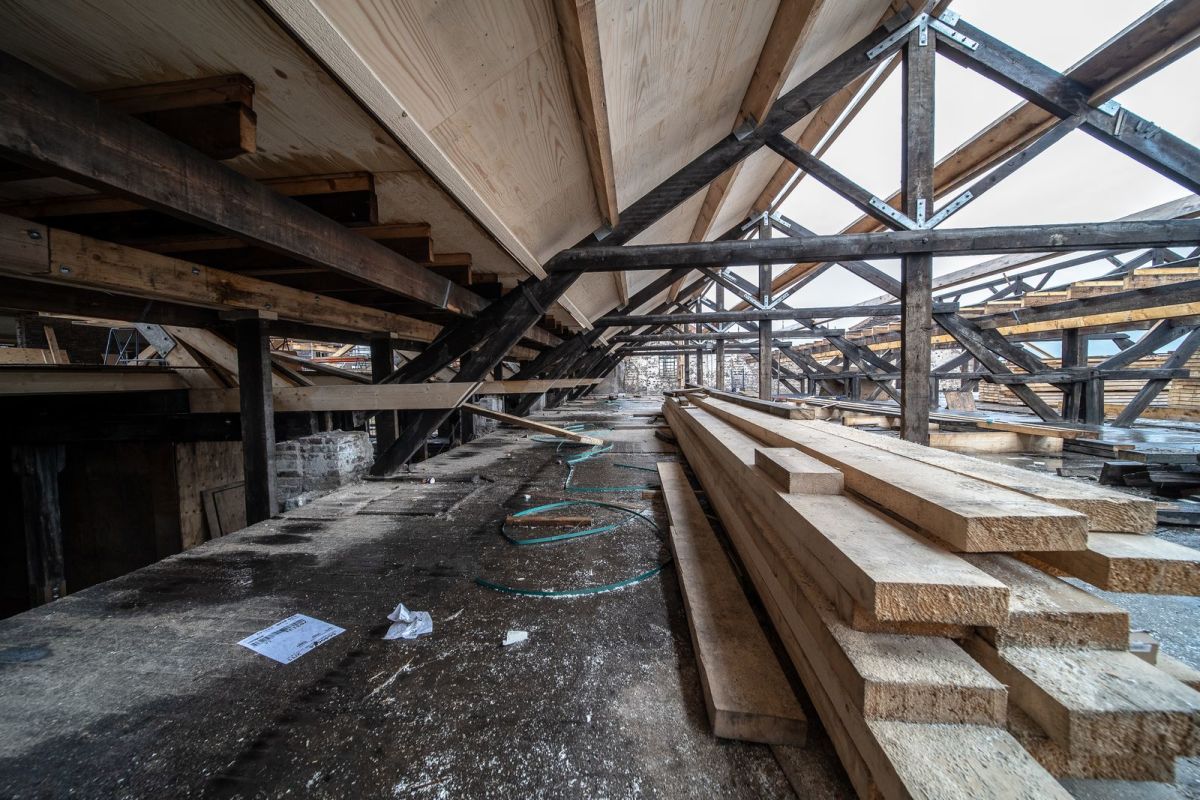
Here is where a lot of Taunton homes go wrong. Joists in most postwar estate houses are 100mm deep, so if someone has boarded the loft for storage directly onto the joists, the insulation underneath is squashed to 100mm and performing at roughly 40% of what 270mm would do. Compressed mineral wool loses most of its value, because it is the trapped air doing the work, not the fibre. The fix is loft legs or a raised boarding system, adding around £25-£45 per square metre to a boarded area. It sounds like a lot until you realise the alternative is paying for insulation that is not insulating.
Cold Loft, Warm Roof, and Room-in-Roof Compared
There are three broadly different jobs hiding behind the phrase "roof insulation", and they cost wildly different amounts. Getting the right one specified is more important than shaving £50 off the quote.
A cold loft is the standard setup: insulation sits at ceiling level, the loft space above stays unheated and ventilated. Cheapest by a mile, and correct for perhaps 75% of Taunton houses. A warm roof puts the insulation at rafter level so the loft space is inside the heated envelope, which you need if the space is used as a room, if there are pipes and a tank up there you would rather not lag individually, or on a flat roof. Room-in-roof insulation is the same principle applied to an existing loft conversion, usually insulating the sloping ceilings, the dwarf walls, and the small void behind them, and it typically costs £2,500-£6,000 for a full conversion.
Warm Roofs on Conservatories and Extensions
The warm roof principle is exactly what makes a solid conservatory roof work, and it is one of the biggest comfort upgrades available on an older Taunton property. We covered the detail of that job in our guide to conservatory roof replacement and warm roof options in Taunton, which is worth a read if you have a room that is unusable for four months of the year. The same insulation logic applies whether the roof is over a conservatory, a flat-roofed extension, or a bedroom.
What You'll Actually Save on Your Energy Bills
Savings claims for insulation get inflated constantly, so here is the honest version. The numbers depend on house type, how warm you keep the place, and what you are heating with.
Insulating a completely bare loft to 270mm typically saves around £330-£380 a year on a detached house, £220-£250 on a semi, and £180-£210 on a mid-terrace, based on current energy prices. Topping up from 100mm to 270mm saves considerably less - usually £20-£40 a year - which surprises people, but it reflects those diminishing returns. That said, the top-up job is cheap enough that payback is still typically 5-8 years, and it also lifts your EPC rating, which matters if you might sell or let. A bare-loft installation on a Taunton semi paying back in under three years is one of the few home improvements where the maths is genuinely not arguable.
Condensation, Ventilation, and Taunton's Damp Winters
This is the section most insulation guides skip, and it is the one that causes the most call-outs in Somerset. Insulation and ventilation have to be designed together or you trade a heating problem for a mould problem.
Taunton sits in a river vale with rain falling on 130-150 days a year and winters that stay mild and wet rather than cold and dry. Relative humidity here regularly sits above 85% for weeks. When you insulate a loft floor properly, the loft space above gets colder, because you have stopped heat leaking up into it. Any moisture-laden air escaping from the house then hits cold timber and condenses. We see this constantly on 1960s and 70s Taunton estates where someone has laid 270mm of wool but blocked the eaves ventilation gap doing it. Leave a 25mm continuous air gap at the eaves, or fit proprietary eaves vent trays, and the problem disappears. The guidance in Approved Document F on ventilation covers what is required, and any decent installer will already be working to it.
Victorian Terraces and Shallow Lofts
The terraces around central Taunton bring their own headache. Many have slate roofs with very shallow pitches and cramped loft voids where there is barely room to crawl, let alone lay 270mm of wool over the joists at the eaves. Where the depth genuinely is not there, high-performance rigid board or multifoil at the perimeter gets you closer to target in half the thickness, at roughly three to four times the material cost per square metre. It is a compromise, but it beats leaving the last metre of ceiling uninsulated, which is where the heat loss concentrates anyway.
Grants, Funding, and Getting It Done Cheaply
Plenty of Taunton households are eligible for help with insulation costs and never check, which is a shame given the sums involved. The schemes change regularly, so it is worth a fresh look rather than relying on what a neighbour told you two years ago.
The Great British Insulation Scheme offers funded or part-funded loft insulation to households in lower council tax bands with a poor EPC rating, and the Energy Company Obligation covers households on certain benefits with potentially the full cost met. Somerset Council also runs periodic local energy schemes. Roughly 1 in 5 households we speak to turns out to qualify for something. If you do not qualify, get three quotes anyway - loft insulation prices vary by 30-40% between installers for identical work, largely because some price in a full clear-out and some do not.
Choosing an Insulation Installer in Taunton
Insulation looks simple enough that anyone can claim to do it, and that is exactly the problem. The workmanship faults are invisible once the boards go back down.
Check that the firm is registered with a recognised scheme - the government-endorsed TrustMark scheme is the one to look for on grant-funded work, and it is effectively mandatory for ECO-funded installations anyway. Ask specifically how they will handle the eaves gap, whether pipes and tanks in the loft will be insulated above the new layer, and whether downlights in the ceiling below need fire hoods or clearance. That last one gets missed more than any other and is a genuine fire risk. Somerset has no shortage of insulation installers, but the market is dominated by grant-scheme subcontractors working at volume, so a local roofer who will actually walk the loft with you tends to produce a better job. Expect a 25-year guarantee on materials, and get the depth achieved written on the paperwork.
FAQ
Q: How much does loft insulation cost in Taunton?
A: Around £8-£15 per square metre supplied and fitted, so £400-£750 for a typical three-bed semi with roughly 50m² of loft, and £700-£1,200 for a larger detached house. Topping up existing insulation is cheaper at £5-£10 per square metre. Rafter-level or room-in-roof insulation is a much bigger job at £60-£120 per square metre.
Q: How much insulation do I need in my loft?
A: 270mm of mineral wool is the recommended depth, which gives a U-value of about 0.16 W/m²K. Most older Taunton homes have 100mm or less, which performs at roughly 40% of what it should. Going beyond 270mm adds very little benefit for the extra cost.
Q: How much will loft insulation save me each year?
A: Insulating a bare loft to 270mm typically saves around £330-£380 a year on a detached house, £220-£250 on a semi, and £180-£210 on a mid-terrace. Topping up from 100mm to 270mm saves less, usually £20-£40 a year, but the job is cheap enough to still pay back in 5-8 years.
Q: Will insulating my loft cause condensation or damp?
A: It can if the eaves ventilation is blocked while the insulation is laid, which is a common fault on Taunton's postwar estates. Once the loft floor is insulated the space above runs colder, so moist air from the house condenses on cold timber. A continuous 25mm air gap at the eaves or proper vent trays prevents it, and Somerset's damp mild winters make this non-negotiable.
Ready to work with Roof Repairs Taunton?
Let's connect! We’re here to help.
Send us a message and we’ll be in touch.
Or give us a call today at 01823 746216
Agency Contact Form
More Marketing Tips, Tricks & Tools